Car Engine’s Two Major Mechanisms and Five Major Systems
The car engine is the core component of a vehicle’s power system, and its performance directly affects the driving performance and economy of the vehicle. A car engine mainly consists of two major mechanisms and five major systems, which work together to complete the engine’s working cycle and energy conversion. Below is a detailed introduction to the two major mechanisms and five major systems of a car engine.
I. Two Major Mechanisms
1. Crankshaft and Connecting Rod Mechanism
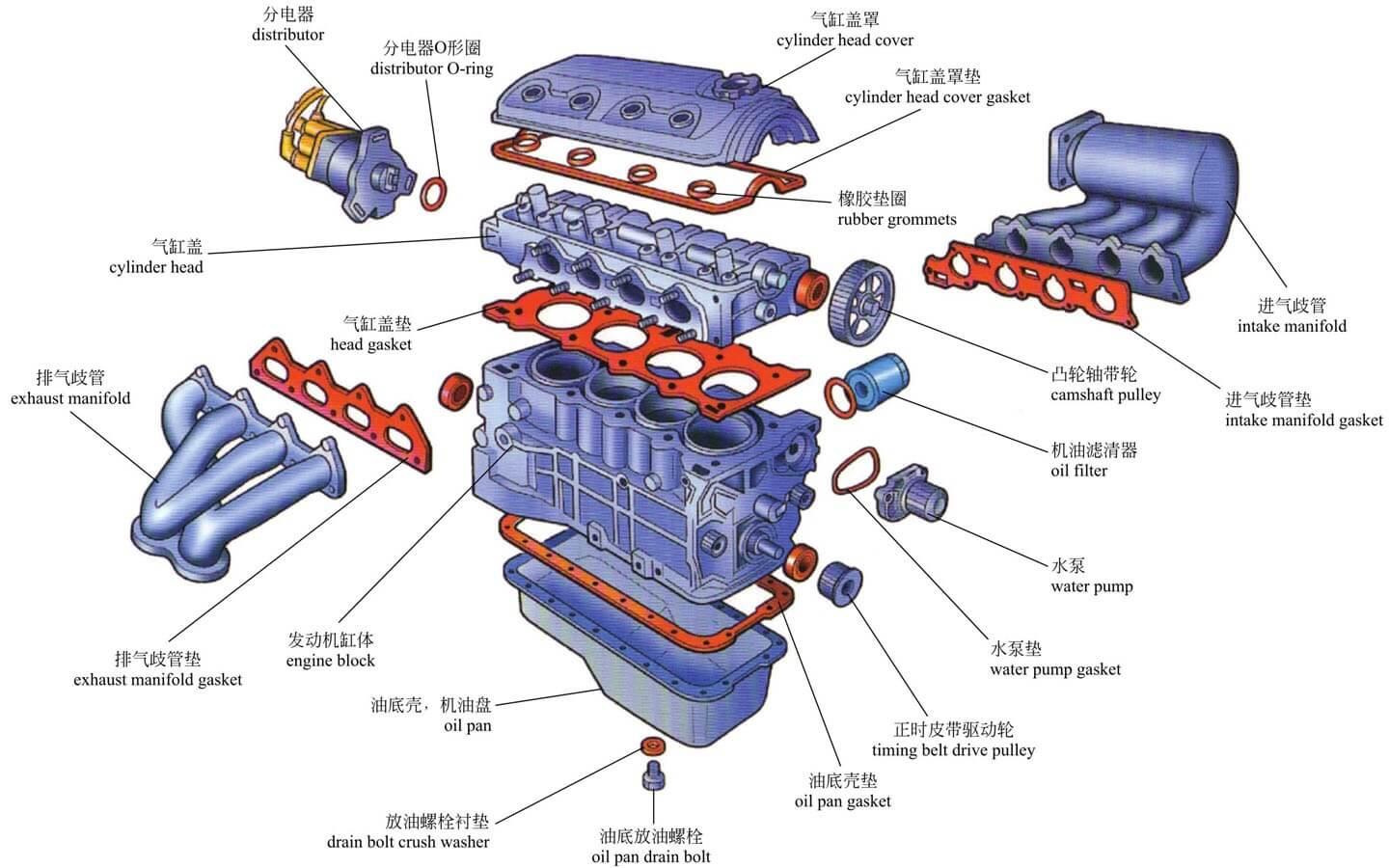
The crankshaft and connecting rod mechanism is an important part of a car engine for completing the working cycle and energy conversion. It is composed of the engine block assembly, the piston and connecting rod assembly, and the crankshaft and flywheel assembly.
- The engine block assembly includes the cylinder block, cylinder head, and other components, serving as the basic structure of the engine.
- The piston and connecting rod assembly is composed of pistons, piston pins, and connecting rods, and is responsible for converting the reciprocating motion of the pistons into the rotational motion of the crankshaft.
- The crankshaft and flywheel assembly is composed of the crankshaft and flywheel. The crankshaft converts the reciprocating motion of the pistons into rotational motion, while the flywheel balances and stores energy.
2. Valve Timing Mechanism
The main function of the valve timing mechanism is to open and close the intake and exhaust valves at the proper time according to the engine’s working sequence and process.
- During the intake stroke, the valve timing mechanism controls the intake valve to open, allowing the combustible mixture or air to enter the cylinder.
- During the exhaust stroke, the valve timing mechanism controls the exhaust valve to open, allowing exhaust gases to exit the cylinder.
The reasonable design and precise control of the valve timing mechanism are crucial to the engine’s performance and efficiency.
II. Five Major Systems
1. Starting System
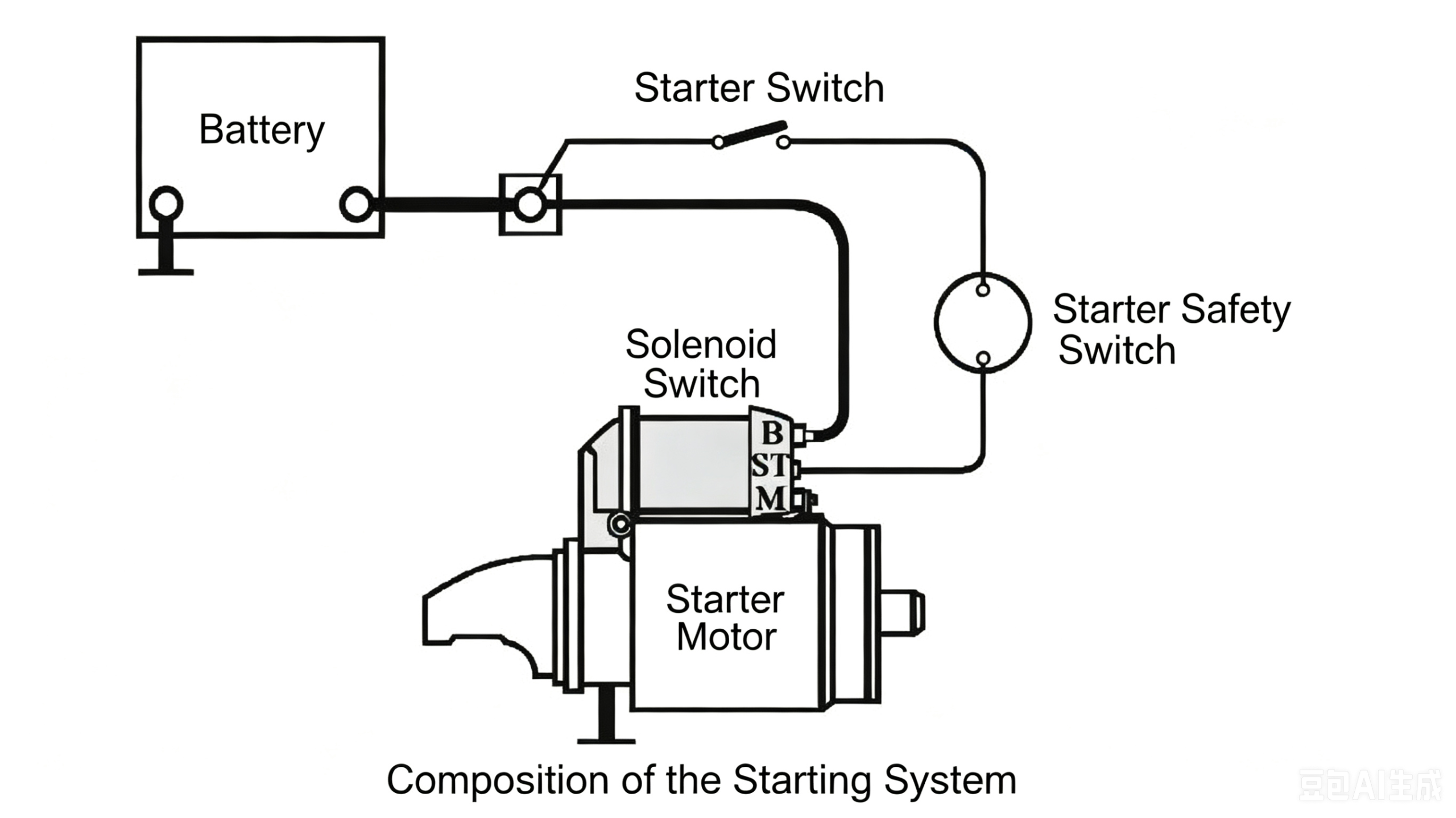
The starting system’s function is to rotate the crankshaft through external force when the engine is not running until the engine can idle automatically. The starting system usually consists of the starter motor, battery, and ignition switch.
- The starter motor converts electrical energy into mechanical energy to drive the crankshaft.
- The battery provides electrical energy to the starter motor.
- The ignition switch controls the start and stop of the starter motor.
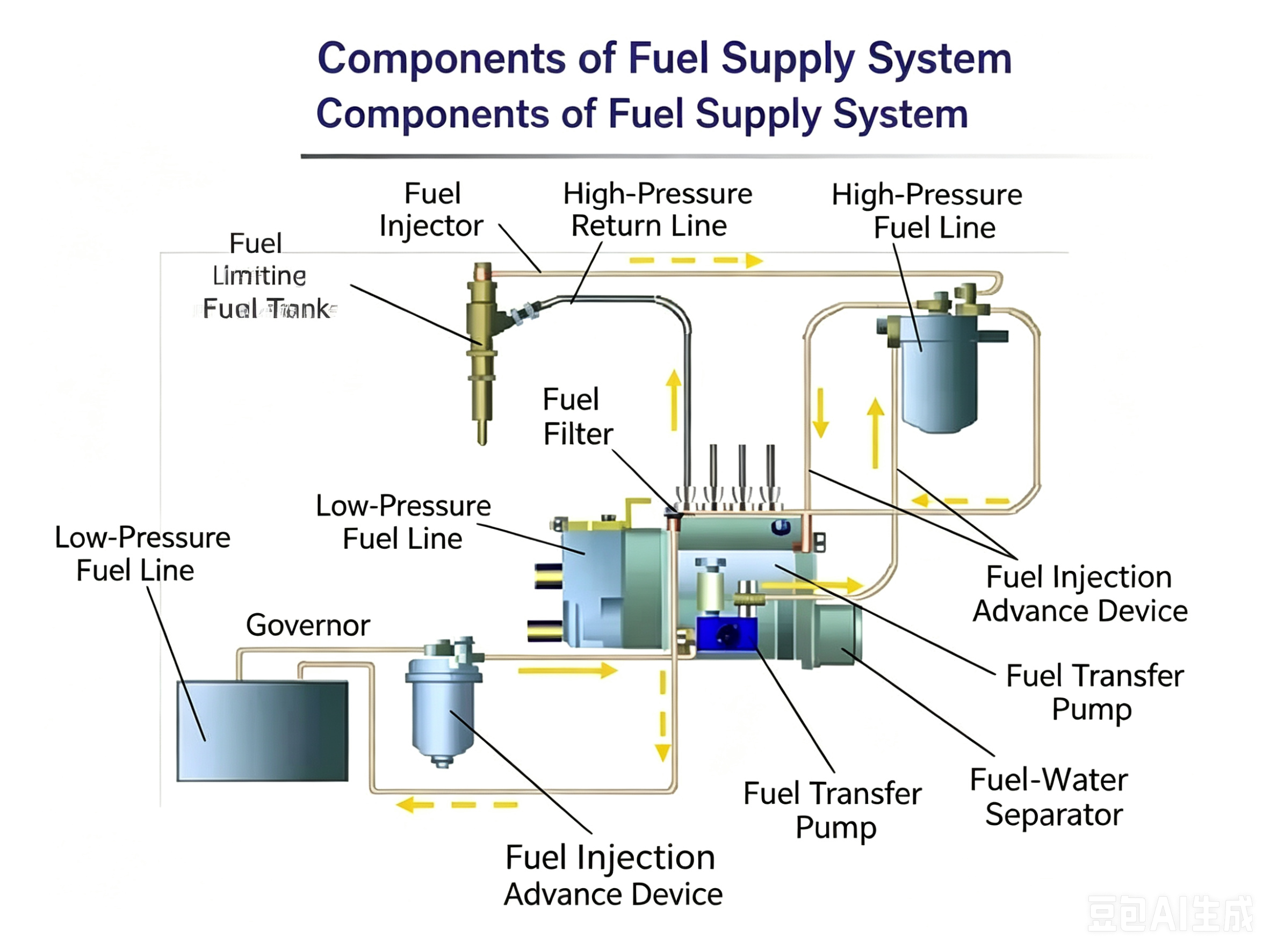
2. Fuel Supply System
The main function of the fuel supply system is to prepare a certain quantity and concentration of combustible mixture according to the engine’s operating conditions, supply it into the cylinders, and expel the exhaust gases after combustion.
In gasoline engines, the fuel supply system usually consists of the fuel tank, fuel pump, filter, carburetor or fuel injection system, and intake manifold.
- The carburetor or fuel injection system is responsible for mixing gasoline and air in a certain ratio to form a combustible mixture.
- The intake manifold delivers the mixture into the cylinders.
3. Cooling System
The purpose of the cooling system is to dissipate part of the heat absorbed by engine components in time to ensure the engine operates at a proper temperature.
In water-cooled engines, the cooling system usually consists of the water jacket, water pump, fan, radiator, and thermostat.
- The water jacket is located in the cylinder block and cylinder head to absorb the heat from the components.
- The water pump circulates the coolant.
- The fan improves the heat dissipation efficiency of the coolant.
- The radiator stores the coolant.
- The thermostat automatically adjusts the flow of coolant according to the engine temperature.
4. Lubrication System
The main function of the lubrication system is to deliver a certain amount of lubricant to the surfaces of relatively moving parts, achieve fluid friction, reduce friction resistance, and decrease wear on the components.
The lubrication system usually consists of the oil pan, oil pump, oil filter, and oil passages.
- The oil pan stores the lubricating oil.
- The oil pump draws oil from the oil pan and delivers it through the oil passages to the surfaces of the friction pairs.
- The oil filter filters impurities in the lubricating oil to ensure its cleanliness.
5. Ignition System
The main function of the ignition system is to produce an electric spark at the end of the compression stroke in a gasoline engine to ignite the combustible mixture and achieve combustion.
The ignition system usually consists of the generator, battery, distributor, ignition coil, and spark plugs.
- The generator and battery provide electrical energy to the ignition system.
- The distributor distributes the electrical energy to the spark plugs of each cylinder.
- The ignition coil converts electrical energy into high voltage and delivers it to the spark plugs.
- The spark plugs generate an electric spark to ignite the mixture.

Conclusion
In short, the two major mechanisms and five major systems of a car engine work together to complete the engine’s working cycle and energy conversion. Reasonable design and precise control of these mechanisms and systems can improve engine performance and efficiency, reduce fuel consumption and emissions, and extend engine service life.
Yeahengine Factory provides the most advanced engine technologies and systems currently available on the market, with mature assembly techniques and a comprehensive after-sales service system, forming the foundation of our brand. We sell globally and are looking for distributors worldwide.
WhatsApp: +86 153 5451 9872
Aliexpress: https://www.aliexpress.com/store/1104682300
Email: sales@yeahengine.com